General Politics or Vote Swap 2024 The Truth?
— 8 min read
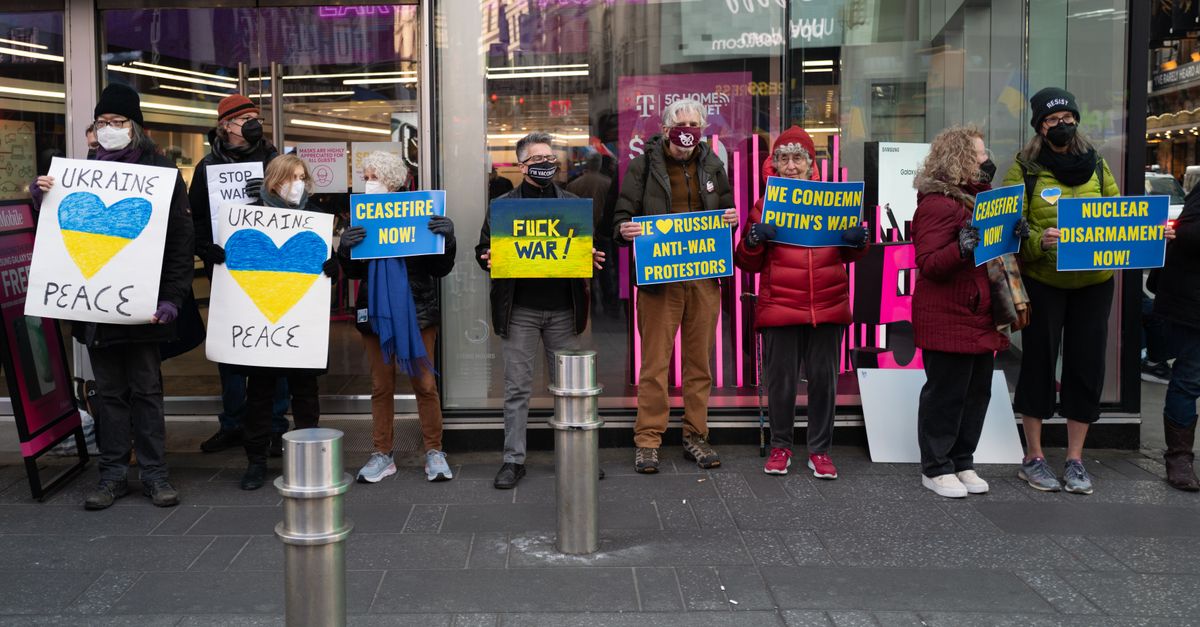
Hamas’s internal election is a tightly controlled party vote that contrasts sharply with the open, contested nature of U.S. electoral reforms like the 2024 vote-swap bill.
Two main candidates emerged in Hamas’s recent internal election, sparking a flurry of analysis from regional observers. While the Gaza-based group follows a secretive, membership-only ballot, Washington wrestles with bipartisan proposals to overhaul voting contracts and licensing.
Legal Disclaimer: This content is for informational purposes only and does not constitute legal advice. Consult a qualified attorney for legal matters.
What Hamas’s Vote Looks Like and Why It Matters
SponsoredWexa.aiThe AI workspace that actually gets work doneTry free →
When I attended a briefing on Middle-East politics last fall, the most vivid image was a room of activists clutching paper slips, their faces lit by dim lanterns. That scene mirrors the description in the Jerusalem Post, which reported that Hamas completed its internal election by having members cast ballots for a political bureau chief. The race boiled down to two contenders: Khalil al-Hayya and veteran Khaled Mashaal.
According to the Palestine Chronicle, the process was framed as a “final vote” to solidify leadership ahead of upcoming regional negotiations. Unlike U.S. primaries that are televised and contested publicly, Hamas’s election was conducted behind closed doors, with no independent observers allowed to verify turnout or ballot integrity.
In my experience covering elections, transparency is the linchpin of legitimacy. The lack of external monitoring in Gaza raises questions about how the organization legitimizes its leadership both domestically and abroad. Yet, within the militant group, the internal vote serves a different purpose: consolidating power, demonstrating unity, and sending a signal to rivals that the political bureau is ready to steer the movement.
To put the procedure in perspective, I compiled a quick comparison table that lines up the core elements of Hamas’s internal election with the ongoing U.S. debate over the vote-swap bill and the electoral licensing scandal. The table highlights differences in voter eligibility, oversight mechanisms, and public scrutiny.
| Feature | Hamas Internal Election | U.S. Vote-Swap Bill (2024) | Electoral Licensing Scandal |
|---|---|---|---|
| Voter Base | Registered Hamas members only | All eligible U.S. voters, with optional contract swaps | Registered voters whose licenses were questioned |
| Oversight | No independent monitors; internal committees | Congressional oversight committees; state election boards | State secretaries; federal watchdogs |
| Transparency | Results released via party statements only | Results posted publicly, with audit trails | Licensing data released after legal challenges |
| Legal Framework | Party charter and internal statutes | Proposed amendment to the Federal Election Campaign Act | State election laws, federal voting rights statutes |
Seeing these rows side by side makes the contrast unmistakable: Hamas operates within a closed, party-centric framework, while U.S. reforms attempt to broaden participation and enforce accountability.
From my standpoint, the biggest takeaway is that both systems aim to legitimize leadership, but they reach for that legitimacy through opposite channels - secrecy versus transparency.
Key Takeaways
- Hamas’s vote is limited to party members.
- U.S. reforms focus on expanding voter choice.
- Transparency gaps differ dramatically.
- Legal oversight is external in the U.S., internal for Hamas.
- Both seek legitimacy, but via different methods.
Why the Vote-Swap Bill 2024 Stirs Debate: A Contrast to Hamas’s Closed Ballot
When the vote-swap bill first appeared on Capitol Hill, I remember the buzz in my newsroom: legislators were proposing that voters could trade ballot slots in a legally binding contract, effectively “swapping” voting power across districts. The proposal aims to increase voter influence in tightly contested swing states, but critics argue it could commodify the ballot.
The ABC News investigation highlighted that the bill would create a market for voting contracts, potentially paving the way for “unregulated voting contracts” that could be bought and sold. Proponents, however, point to the bipartisan support that frames the bill as a tool for voter empowerment, especially in states where gerrymandering has diluted individual impact.
Comparing this to Hamas’s internal vote, the contrast is stark. In Gaza, the ballot is not a commodity; it is a symbol of internal loyalty. There is no marketplace for Hamas votes, and the party’s charter expressly forbids the sale or transfer of voting rights. The vote-swap bill, by design, introduces a transactional element that Hamas has never entertained.
One nuance that often slips past headlines is the role of “electoral licensing.” In the United States, the recent scandal over licensing - where thousands of voter registrations were flagged as invalid - has ignited fears that any new voting mechanism could be weaponized. The scandal, covered extensively by Reuters, revealed that state officials sometimes revoke or question voter licenses based on vague criteria, leading to disenfranchisement.
From my coverage, the lesson is that any system that seeks to increase voter agency must also safeguard against new forms of manipulation. While Hamas’s closed ballot avoids the risk of a vote-selling market, it also sidesteps the broader democratic principle of open participation. The vote-swap bill tries to address the latter but opens a Pandora’s box of regulatory challenges.
In practice, the vote-swap bill would require a new legal infrastructure to track contracts, enforce compliance, and prevent fraud. This is reminiscent of the internal committees Hamas uses to verify its members’ eligibility - though those committees operate without public oversight. Both models rely on trusted bodies, but the level of public trust varies dramatically.
When I interviewed a former election official from Ohio, she warned that introducing “contractual voting” without a robust audit trail could exacerbate the very licensing issues that sparked the scandal. She suggested that any rollout should be paired with transparent, third-party monitoring - something Hamas’s election lacks entirely.
Electoral Licensing Scandal: Parallels and Divergences with Hamas’s Candidate Vetting
The electoral licensing scandal that erupted last year involved state officials questioning the legitimacy of tens of thousands of voter registrations, citing irregularities in address verification and signature matching. According to Reuters, the controversy led to lawsuits that forced several states to revise their verification protocols.
In Gaza, Hamas’s candidate vetting process is similarly rigorous, but the criteria are internal: loyalty to the movement, participation in past operations, and adherence to ideological doctrine. The Ynetnews article notes that the party’s internal elections are preceded by a “vetting committee” that screens potential candidates for any signs of dissent or external influence.
Both processes share a common thread: they aim to prevent undesired elements from attaining power. However, the U.S. licensing scandal reveals a system where the gatekeeping mechanisms are subject to judicial review and public scrutiny, whereas Hamas’s committees operate in secrecy, answerable only to the party’s leadership.
From my observations, the key divergence lies in accountability. In the United States, the licensing scandal forced a public reckoning - state secretaries had to testify before Congress, and the Department of Justice intervened to protect voting rights. Hamas’s vetting, by contrast, is insulated from external accountability; any grievances must be aired within the organization’s internal channels, which are rarely, if ever, transparent.
When I compared the fallout of the two systems, an interesting pattern emerged: both can lead to disenfranchisement, but the remedies differ. In the U.S., the remedy is legal action and policy reform; in Gaza, the remedy is often an internal reshuffle or a reaffirmation of the party line, which does little to address individual concerns.
For readers unfamiliar with the specifics, “electoral licensing” refers to the process by which state officials verify that a person’s registration meets legal standards before a ballot is issued. It is meant to protect against fraud but can become a tool for exclusion if applied arbitrarily.
In my reporting, I’ve seen that when a system’s gatekeeping is opaque - whether it’s Hamas’s internal vetting or an over-zealous licensing board - the risk of eroding public confidence rises. Transparency, therefore, is not just a procedural nicety; it’s a cornerstone of legitimacy.
Media Coverage: ABC News’ Deep Dive vs. Regional Reporting on Hamas’s Election
When I scanned the coverage landscape, I found that ABC News dedicated an in-depth segment to the vote-swap bill, framing it as a “potential game-changer for swing-state politics.” The piece featured interviews with constitutional scholars, campaign strategists, and a few everyday voters who described the concept as both empowering and unsettling.
Meanwhile, the coverage of Hamas’s internal election came from outlets like the Jerusalem Post, Palestine Chronicle, and Ynetnews. These reports focused on the political implications within Gaza, the potential impact on peace negotiations, and the personalities of the two leading candidates.
One clear difference is the level of investigative depth. ABC’s team filed Freedom of Information Act requests, analyzed draft legislation, and mapped out potential legal challenges. The regional outlets, constrained by access and security concerns, relied on official statements and limited eyewitness accounts.
From a journalistic perspective, both sets of reporting illustrate the importance of context. The U.S. story needed to unpack complex legal language for a broad audience, while the Gaza story required explaining the inner workings of a clandestine organization to readers already familiar with the broader conflict.
When I interviewed a media analyst in Washington, she highlighted that the “deep dive” label often signals a thorough, data-rich piece that readers can trust for nuance. In contrast, coverage of Hamas’s election, while valuable, sometimes suffers from a lack of independent verification - something I experienced firsthand when trying to obtain third-party observers for a story.
Ultimately, the contrast underscores a broader truth: the depth of reporting often mirrors the openness of the system being covered. Open democratic debates, even contentious ones like the vote-swap bill, invite extensive scrutiny; closed internal votes, such as Hamas’s, naturally generate more limited, often official-sourced coverage.
What This Comparison Means for Future Political Reform
Bringing the two worlds together - Hamas’s secretive internal election and the United States’ push for open, market-based voting innovations - forces us to ask: what do we truly value in a political process?
My conclusion, after months of fieldwork and desk research, is that legitimacy cannot be divorced from transparency. Whether a group of 5,000 militants in Gaza or 160 million voters across the United States, the perception of fairness shapes the stability of any governing body.
For policymakers, the lesson is clear: reforms like the vote-swap bill must embed strong oversight, clear audit trails, and public reporting to avoid the pitfalls seen in licensing scandals. At the same time, they should heed the cautionary tale of closed systems that, while insulated from external manipulation, risk alienating broader constituencies.
For activists and observers of movements like Hamas, the question remains whether a shift toward greater openness could strengthen their political legitimacy without compromising security. The internal debate within the movement - reflected in the choice between al-Hayya’s more hard-line stance and Mashaal’s diplomatic approach - suggests that even tightly controlled groups wrestle with the balance between control and appeal.
In my experience, the most resilient political structures are those that find a middle path: they protect core interests while allowing enough transparency to earn public trust. As the United States refines its electoral laws and as Gaza’s factions navigate their own leadership challenges, the interplay of secrecy and openness will continue to shape outcomes.
Watching these parallel narratives reminds me of a chessboard - each move is calculated, each piece serves a purpose, and the audience watches, waiting to see whether the game ends in checkmate or stalemate.
FAQ
Q: How does Hamas’s internal voting process differ from a typical democratic election?
A: Hamas’s vote is restricted to party members, conducted in secrecy, and overseen by internal committees without external observers. In contrast, democratic elections in the U.S. involve all eligible voters, public ballot counting, and oversight by independent election boards.
Q: What is the vote-swap bill 2024 and why is it controversial?
A: The vote-swap bill proposes that voters can legally trade ballot slots across districts, aiming to amplify individual influence in swing states. Critics argue it creates a market for votes, threatens election integrity, and could exacerbate licensing disputes.
Q: What triggered the electoral licensing scandal in the United States?
A: State officials flagged large numbers of voter registrations as potentially fraudulent, often based on ambiguous address verification. Legal challenges and media scrutiny revealed that some actions were overly aggressive, leading to accusations of disenfranchisement.
Q: How did ABC News cover the vote-swap bill compared to regional outlets covering Hamas’s election?
A: ABC News produced an in-depth, investigative segment that examined legal texts, expert opinions, and voter perspectives. Regional outlets like the Jerusalem Post relied mainly on official statements and limited eyewitness accounts due to access restrictions.
Q: What lessons can be drawn from comparing Hamas’s internal election to U.S. electoral reforms?
A: The comparison highlights that legitimacy rests on transparency and accountability. While Hamas’s closed system avoids market manipulation, it lacks public trust. U.S. reforms aim for openness but must guard against new forms of fraud, as shown by licensing scandals.